Roof Maintenance Checklist for Homes in Tampa, FL
Your roof is fundamental in protecting you from Tampa’s intense storms, hot summer days, and high humidity. Tampa’s changing weather …
February 6, 2026
7 MIN READ
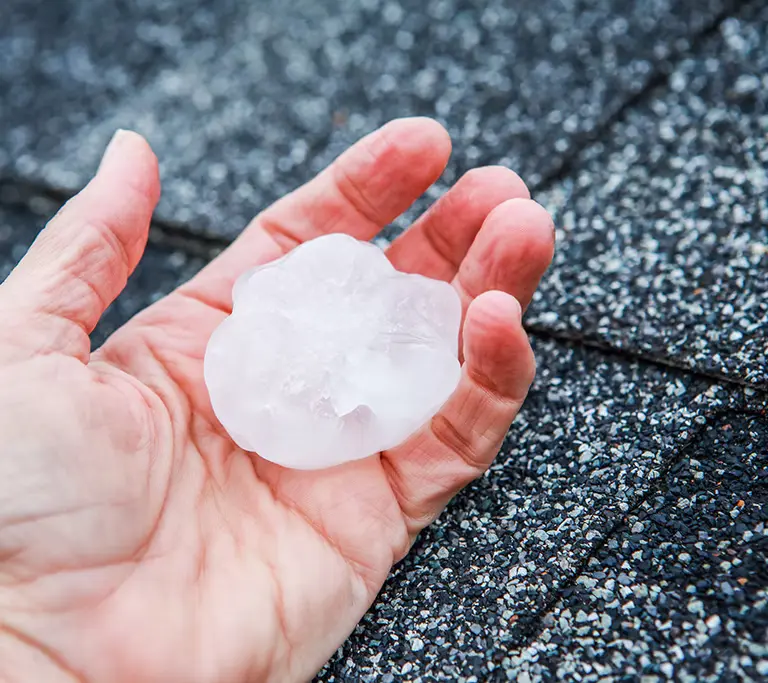
Spring doesn't just bring warmer temperatures and longer days to Ohio, Pennsylvania, North Carolina, Florida, and Tennessee. It brings hail and for homeowners across the Midwest and Southeast.
Hailstorms are a leading cause of roof damage and insurance claims in the United States. A single storm can compromise an otherwise healthy roof.
It can also silently damage a vulnerable roof and leave damage that won't appear as a leak until months later. By then, the interior damage has already started.
So the real question before storm season hits: will my roof be able to handle hail season?
After a hailstorm, most homeowners do a quick scan of their property: check the car, look at the gutters, glance up at the roof. If nothing looks obviously wrong, they move on.
That's a costly mistake.
Hail damage to asphalt shingles is often invisible from ground level. Hail knocks the protective granules off shingles. Granules shield the asphalt layer underneath from UV exposure and moisture.
Once they're gone, your shingles begin to break down, lose their flexibility, and crack. The damage doesn't look dramatic right away, but your roof's useful life shortens significantly with every storm it absorbs.
Even pea-sized hail, when driven by wind at the right angle, can systematically strip granules from large sections of a roof.
Not all roofs are created equal. Several factors determine how your roof will hold up when the storm rolls in.
A newer asphalt shingle roof often withstands a hailstorm without significant damage. Older shingles do not. If your roofing materials are brittle, curling, or granule-depleted, they are far more vulnerable. A hailstorm can rapidly accelerate aging on a roof approaching or past the 20-year mark.
Roofing shingles are tested and rated for impact resistance. They are given a number on a scale of Class 1 through Class 4, with Class 4 offering the highest protection. Many homeowners don't know what rating their current shingles carry. Depending on your provider, you may not have gotten the most impact-resistant material available so it’s best to assess whether you have damage after a storm.

Even the best shingles fail early if they weren't installed correctly. Poor nailing patterns, inadequate underlayment, and improper flashing around chimneys, vents, and valleys all create entry points. These spots are typically where water intrudes after a storm.
Roofs in heavy storm areas may be compromised. These weak spots are often areas that aren't obvious without a professional inspection. Pre-existing granule loss, micro-cracks, or previous repairs that weren't done correctly all make your roof more susceptible to damage.
The best time to find out if your roof is ready for hail season is before hail season, not during. A professional inspector will provide an honest assessment of your roof's current condition. This includes identifying any existing vulnerabilities and assessing whether a repair, an upgrade, or a full replacement makes sense.
At Lifetime Quality, our inspections are free and come with no obligation. Our team is trained to spot the kinds of subtle damage that homeowners miss from the ground. We'll show you exactly what we find with documentation you can use if you need to file an insurance claim.
If an inspection reveals that your roof is nearing the end of its useful life, replacing it before a major hailstorm is almost always the better financial decision than dealing with the aftermath.
A new roof installed with Class 4 impact-resistant shingles can hold up significantly better in a hailstorm than an aging roof, potentially reducing claim frequency and even qualifying you for a discount on your homeowner's insurance premium in some states. It also comes with warranty protection. At Lifetime Quality, every roof we install is backed by a lifetime warranty, which means the investment you make now is protected for the long term.
The other consideration is insurance. If your roof is already old and sustains hail damage, your insurer may pay out on an actual cash value basis rather than replacement cost. Proactively replacing an aging roof before it becomes a claim issue puts you in a stronger position.
Storms can move through quickly, and by the time you're calling to schedule an inspection after a major event, so are hundreds of other homeowners in your area.
Schedule your free inspection now, find out exactly what condition your roof is in, and go into storm season knowing you've done what you can to protect your home.