
The Impact of Columbus Weather on Your Roof

Blog

8 MIN READ
The Impact of Columbus Weather on Your Roof

The Impact of Columbus Weather on Your Roof

Living in Columbus, Ohio, your property's exterior takes a beating. Your roof is the first line of defense against the elements. It protects your home from golf ball-sized hailstones, gale force winds and heavy rain. 

But roofs have to endure more than storms. Columbus experiences four distinct seasons, with humid summers, crisp falls, icy winters and rainy springs. Each affects roofs in different ways. Understanding their impacts can help you prepare your roof for Mother Nature's changing moods. 

Explore the effects of Columbus weather on your roof. From warning signs to handy tips, this guide will help you keep your roofing strong in any season. 

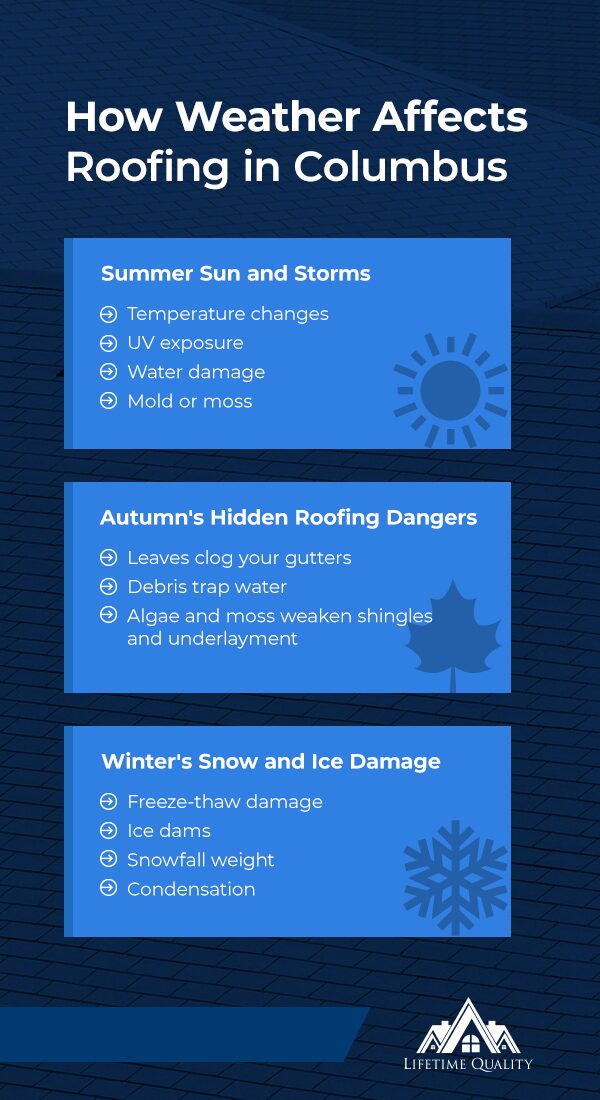
How Weather Affects Roofing in Columbus

Each season leaves its fingerprint on your roofing. Over months and years, those fingerprints turn into patterns of wear. From summer sun exposure to winter ice dams, here's how Columbus weather affects your roof.
How Weather Affects Roofing in Columbus

Summer Sun and Storms

Summers are perfect for visiting the Columbus Zoo or exploring one of the city's many parks. However, the sun and sweltering heat can take their toll. Temperatures in Columbus can reach 90° Fahrenheit or higher in the summer. Heat, humidity and ultraviolet (UV) exposure can wreak havoc on roofing materials. 

Summertime affects roofs in the following ways:

  • Temperature changes: Summer temperatures jump between hotter days and cooler nights. Your roof reacts to these shifts. The materials expand when hot and contract when cool, weakening the structure. Over time, this cycle can cause asphalt shingles to curl or ceramic tiles to crack. 
  • UV exposure: UV radiation is almost as harmful to your roof's health as it is to your skin. It degrades materials through a process known as photodegradation. For example, prolonged sun exposure can dry the oils in asphalt shingles. UV radiation speeds up the aging process of asphalt. With too much exposure, your roof may need more frequent repairs or earlier replacement. UV rays can also cause colors to fade, leaving your roof looking outdated. 
  • Water damage: Columbus experiences frequent summer thunderstorms that roll in fast and loud. Extreme winds can lift loose shingles like playing cards. Once one shingle lifts, it can create a domino effect, allowing rain to seep in through the gaps. A summer storm may pass in minutes, but it can leave behind water damage that remains hidden for months. 
  • Mold or moss: Fungus thrives in warm, damp environments. Beyond weakening your roof's structure, mold and moss can also harm your health. Breathing in mold spores can trigger allergic reactions, asthma and respiratory problems. 

Autumn's Hidden Roofing Dangers

Mother Nature puts on a show in the fall, transforming Ohio into a landscape of red, yellow and gold. While beautiful, autumn brings an underestimated threat to roofs. The leaves that paint neighborhoods also clog your gutters. With nowhere to go, water overflows, seeping under the roof's edge. It can penetrate the horizontal board under the eaves — also called the fascia — and weaken the wood. If that moisture lingers, rot often follows. 

Another concern is debris resting on the roof and trapping water against the surface. Where there's a damp, warm environment, algae and moss are more likely to form. Those green patches hold water long after the rain stops, weakening shingles and underlayment.

Winter's Snow and Ice Damage

Few sights rival the beauty of Arch City under a dusting of fresh snow. As picturesque as they can be, Ohio winters bring specific roofing threats, such as:

  • Freeze-thaw damage: Winter temperatures often become cold enough to freeze water before heating up enough to melt it again. This freeze-thaw cycle can damage roofing. Moisture inside asphalt shingles can freeze, causing cracks. Flashing can become warped or displaced, creating gaps that allow water through.
  • Ice dams: Heat escaping from the attic can melt snow on your roof. The snowmelt then flows toward the colder edge, where it refreezes and forms ice dams. These blockages stop water from draining, leading to potential leaks and structural damage. 
  • Snowfall weight: Heavy, wet snow can load a roof with more weight than it can handle. This extra weight can strain supporting structures like rafters, walls and trusses. The structural stress can result in sagging or collapse. 
  • Condensation: When cold exterior and warm interior temperatures meet, condensation follows. Condensation can lead to bigger issues, such as mold, mildew or structural damage. 

Spring Showers and Roofing Leaks

Columbus comes alive in spring with native wildflowers, like trillium and spring beauty. Along with new growth comes plenty of precipitation. Unpredictable thunderstorms can bring heavy rainfall and hail. Water slips into the smallest gaps. Once it settles inside the roof's structure, it creates issues like leaks, rot and mold. 

Spring storms can also bring winds that test the strength of your roof. Gusts might lift shingles, exposing the underlayment and allowing rain through the open seams. Falling branches from nearby trees can crack or puncture roofing materials, making each crack an entry point for moisture. A storm can scatter debris that compromises the roof's drainage abilities. 

Severe Weather Events

Columbus has its fair share of extreme weather. Although it falls outside Tornado Alley, the city has a history of twisters. Tornado wind speeds can reach 100 to 300 mph, potentially stripping asphalt shingles or ripping entire roofs off. 

Thunderstorms are far more common, including occasional hail. Hailstones can dent roof materials or remove the protective granules from shingles. Rain has a way of exploiting existing vulnerabilities in your roofing. It sneaks through missing shingles or damaged flashing, weakening and rotting materials. 

8 Roof Damage Warning Signs

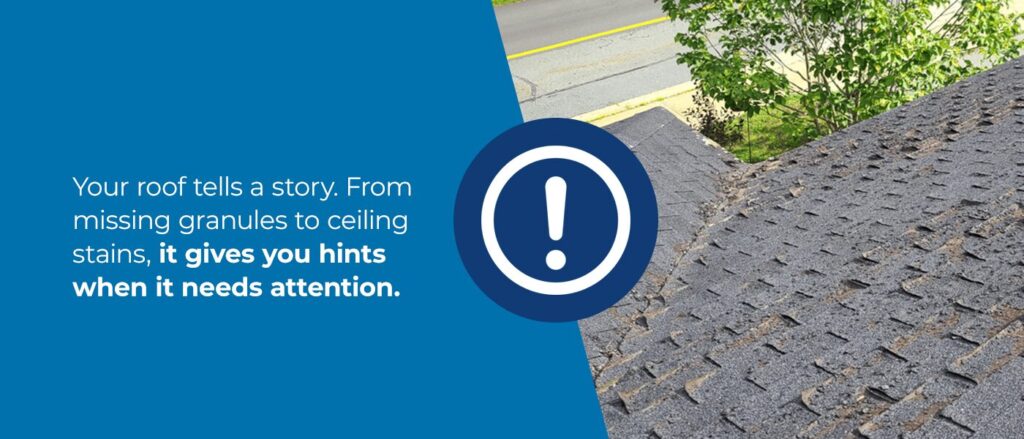
Your roof tells a story. From missing granules to ceiling stains, it gives you hints when it needs attention. While it's best to leave on-roof inspections to the professionals, there are a few signs you can look out for. For your own safety, investigate from the ground or through a window with binoculars. 
8 Roof Damage Warning Signs

Take note of these roof damage red flags:

  • Damaged or lost shingles: Look for cracked, curling, or dented shingles that signal wind or hail damage. Wind can also tear off shingles. If you notice empty spaces where your shingles used to be, call a roofing company for repairs.
  • Lost granules: The granules on asphalt shingles defend against UV rays, fire and the elements. Granule loss compromises your roof's protection. Investigate your gutters and downspouts for lost granules. An excess of these tiny, coarse particles signals your shingles need replacement. 
  • Other damaged components: Check the condition of fascia, soffits, gutters and flashing. Any damage to these parts can affect roof integrity.
  • Debris: A fallen tree or branch on your roof can cause serious destruction. Even smaller debris, such as leaves or twigs, can blow into gutters, leading to blockages and leaks. 
  • Interior leaks: Signs of a leaking roof include musty odors, peeling paint, and stains on walls or ceilings. Dripping water or a sagging roof can also indicate water buildup. 
  • Visible light: Head to your attic during the day and turn off any lighting. Do you see sunlight streaming through the boards? Gaps in the roofing can let water and pests in while making your roof less energy-efficient. 
  • Blocked gutters: Your gutters play a vital role in proper roof drainage. Examine your gutters for overflowing water, vegetation growth, rust or detached sections. 
  • Rising energy bills: A weather-damaged roof can impact your property's energy efficiency. If you notice a rise in your energy bills without a change in usage, your roofing could be the culprit. 

Top Tips for a More Weather-Resistant Roof

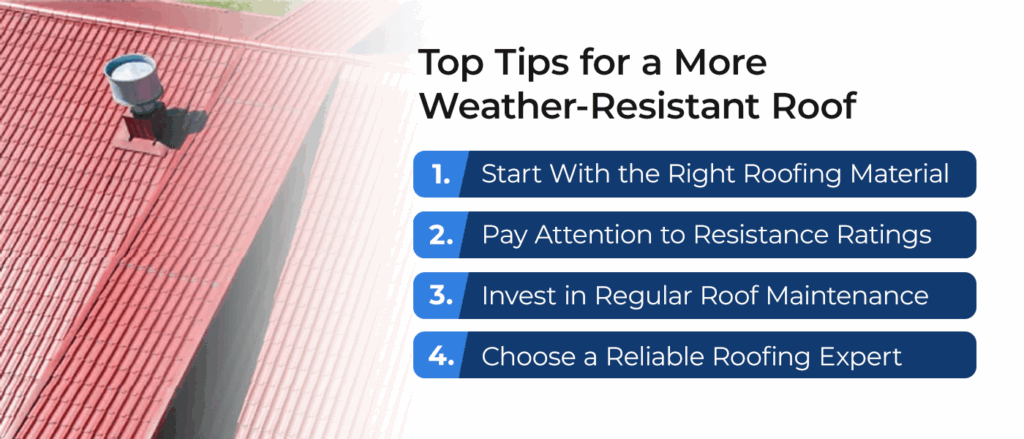
Mother Nature is tough. With the right materials and care, your roof can be tougher. Follow these tips to reduce Columbus' weather impact on your roof.
Top Tips for a More Weather-Resistant Roof

1. Start With the Right Roofing Material

The weather in Columbus keeps homeowners and commercial property owners on their toes. One week brings sunny skies, the next a sudden downpour. The perfect roof stays strong in all four seasons, adding beauty, value and protection to your property. 

Here's how the most popular roofing options perform when the weather gets unpredictable:

  • Asphalt shingles: Durable and dependable, asphalt shingles are the workhorse of Ohio roofs. They hold up well through shifting temperatures or seasonal storms. These shingles come in a wide range of colors and styles to complement any home design. Reflective shingle options can help lower cooling costs during hot summers. With proper maintenance, asphalt roofs can last up to 30 years. Repairs after hail or wind damage are straightforward with a trusted contractor. 
  • Metal roofing: Sleek and modern metal roofing has a lifespan of 50 years or more. It is resistant to wind, hail, ice and fire. Metal reflects sunlight, absorbing less heat to keep interiors cooler. This low-maintenance material often uses recycled materials, making it a sustainable choice.  
  • Slate roofs: Slate blends elegance with longevity. It withstands fire, moisture and extreme cold, resisting ice dams and snow buildup. A slate roof can last over 100 years with proper care. 
  • Clay or concrete tiles: These heavy hitters stand up to high temperatures. Their weight and interlocking design keep them in place during high-wind events. Under the right conditions, these tiles can withstand winds of up to 200 mph. However, it's important to assess whether your property can handle the load. Clay and concrete tiles can last from 50 to 75 years. 
  • Synthetic roofing: Polymer or rubber roofing provides enhanced impact resistance. Synthetic roofing can mimic the look of natural materials, such as cedar shakes or slate. Its cost-effectiveness and durability make it a top choice for commercial applications. 

2. Pay Attention to Resistance Ratings

Roofing materials have ratings that measure their ability to withstand real-world weather conditions. When you understand what each rating means, you can choose a roof built to handle any season:

  • Impact resistance: Hail, branches and wind-blown debris can strike your roof during a storm. Roofing products undergo impact resistance testing by Underwriters Laboratories (UL) and FM Approvals. Materials are rated from Class 1 to Class 4. Class 4 materials withstand the impact of 2-inch steel balls dropped from 20 feet without cracking.  
  • Wind resistance: When gusts sweep across Ohio's open plains, shingles face serious lift pressure. Wind resistance classifications range from Class A at 60 mph to Class H at 190 mph.
  • Fire resistance: Roof materials feature a Class A, B or C fire rating. Class A offers the most protection. Some asphalt shingle, metal, clay and cement tile roofing materials carry this top-tier rating. They resist the spread of flames and help prevent embers from igniting the roof decking. 

3. Invest in Regular Roof Maintenance

Even the highest-quality roof can wear with prolonged exposure to sun, wind, rain and snow. A little care goes a long way to keep your roof in peak condition. Make a habit of seasonal maintenance, such as fall gutter clearing and spring inspections. You can perform some basic tasks on your own, such as visual checks or removing debris. For everything else, partner with a professional roofing company. 

Regular inspections help to catch potential threats early. Addressing small issues right away can help you avoid more expensive repairs or total roof replacements. Routine upkeep also enhances energy efficiency. When you call a professional, a technician will check your roof from the eaves to flashing, sealing gaps and improving insulation.  

4. Choose a Reliable Roofing Expert

You notice a roof leak after a storm. Wanting to fix the issue before it escalates, you call the first company you find. A week after the repairs, your roof is still leaking — and so is your wallet. Save yourself the headache. Choosing an experienced contractor from the start can save you time and money in the long run.

Look for a well-established company with a proven reputation. The right roofing experts will provide long-lasting roofing solutions tailored to your needs. Partner with a local business that understands the city's weather conditions and delivers roofing services for Columbus, OH. An all-in-one provider can install, repair and maintain your roof to perform throughout the year. 

Weather the Storms With Columbus' Roofing Experts

Columbus roofs have seen summer sunsets and endured winter snow. Caring for your roof means protecting the memories built beneath it. At Lifetime Quality Roofing and Exterior Services, we are part of the neighborhoods we serve. We understand how Ohio weather can shift from calm to stormy in a matter of hours. You can rely on our team to keep your roof ready for the next change in season.

The secret to success lies in our values. Driven by trust, transparency, community and quality service, we put our customers first. We're ready to handle any residential or commercial roofing need. Count on us for roof replacements, repairs, maintenance and storm damage restoration.

A roof built and cared for with experience stands stronger through every storm. Schedule your free roof inspection with Lifetime Quality today. We'll help keep your property secure, beautiful and protected, whatever the weather.  

Weather the Storms With Columbus' Roofing Experts
Previous ArticleBeyond Asphalt: Exploring Alternative Roofing Materials for Columbus Homes Next ArticleGrants Help Florida Homeowners Complete Improvements