
Roof Maintenance Checklist for Homes in Tampa, FL
Your roof is fundamental in protecting you from Tampa’s intense storms, hot summer days, and high humidity. Tampa’s changing weather …
February 6, 2026
7 MIN READ

As signs of winter’s end start to appear, most homeowners think about spring cleaning and landscaping. However, other parts of your home’s exterior took the brunt of winter’s ice, snow, and wind.
Roofs are the first line of defense against the elements and are impacted by the seasons.
This winter was particularly intense for much of the country. Whether it was significant snowfall in the midwest, ice storms in the south, or the rare freezing temperatures in west central Florida, homeowners throughout our regions were affected. This active winter weather could have created unseen impacts to your home’s roof.
Between the freeze-thaw cycle that expands cracks and creates ice dams to the weight of heavy snow, your roof may have sustained damage you can’t see from the driveway.
With spring rain right around the corner, now is the time to ensure your roof is watertight.
Here are the seven most essential spring roof maintenance tasks you should look to perform this spring.
You don’t need to climb a ladder or get on your roof to spot major issues. Walk your property to inspect as many visibility points as possible. Look for:
Fall is when most homeowners clean gutters of debris, like falling leaves, but winter can add additional organic material. Things like twigs, pine needles, and even late falling leaves can accumulate in the gutter throughout the winter.
If gutters are blocked, spring rain will back up under your shingles, leading to fascia rot and expensive roof leaks.
While cleaning your gutters, pay attention to what’s inside. If you see a large amount of "sand" or grit, those are your shingle granules. Granule loss is a major red flag for homeowners. This means your shingles no longer have their UV protection and are becoming brittle. When this happens, it is often time to think about roof replacement.
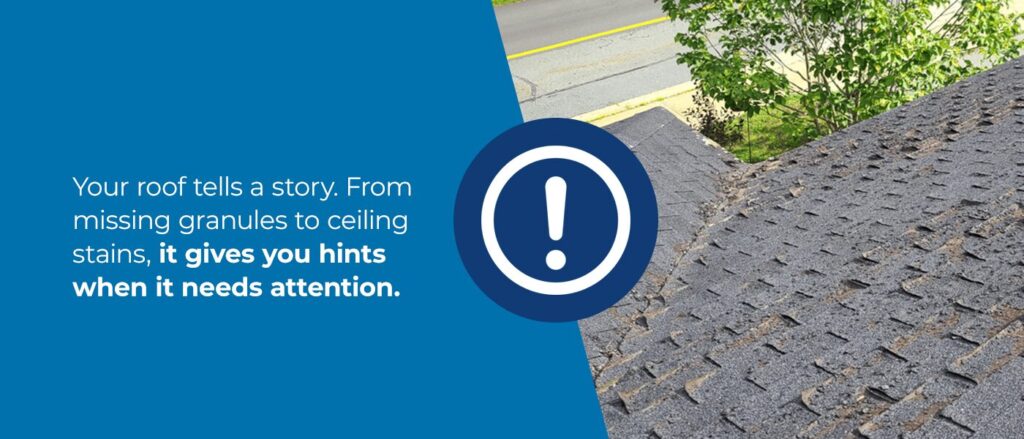
Flashing is the metal material that seals the breaks in your roof around the chimney, skylights, and vent pipes. Because metal expands and contracts at a different rate than shingles, winter often causes these seals to crack or pull away. Most spring roof leaks start at the flashing, so catching a small gap now can save you thousands in water damage later.
The best way to find a roof leak is often from the inside. Take a flashlight into your attic on a sunny day and look for:
Spring is the time to complete landscaping projects that accumulated over the winter. Tree branches that grew close to your roof can scrape against shingles, stripping away their protective coating. Additionally, heavy spring winds can damage branches, which can impact roofing. Keep a 5-to-6-foot clearance between your roof and any nearby trees.
While DIY inspections are great for spotting obvious issues, some damage is invisible to the untrained eye. A professional roofer can identify soft spots, structural issues, and ventilation problems that could lead to a premature roof replacement.
Don't wait for the "peak" summer storm season to fix your roof. In the spring, the weather is often ideal for roofing projects. Asphalt shingles seal better in mild spring temperatures. Additionally, roofing companies have more availability before peak storm season. If you are even considering roof replacement, now is the ideal time to schedule a roof inspection.