Roof Maintenance Checklist for Homes in Tampa, FL
Your roof is fundamental in protecting you from Tampa’s intense storms, hot summer days, and high humidity. Tampa’s changing weather …
February 6, 2026
7 MIN READ
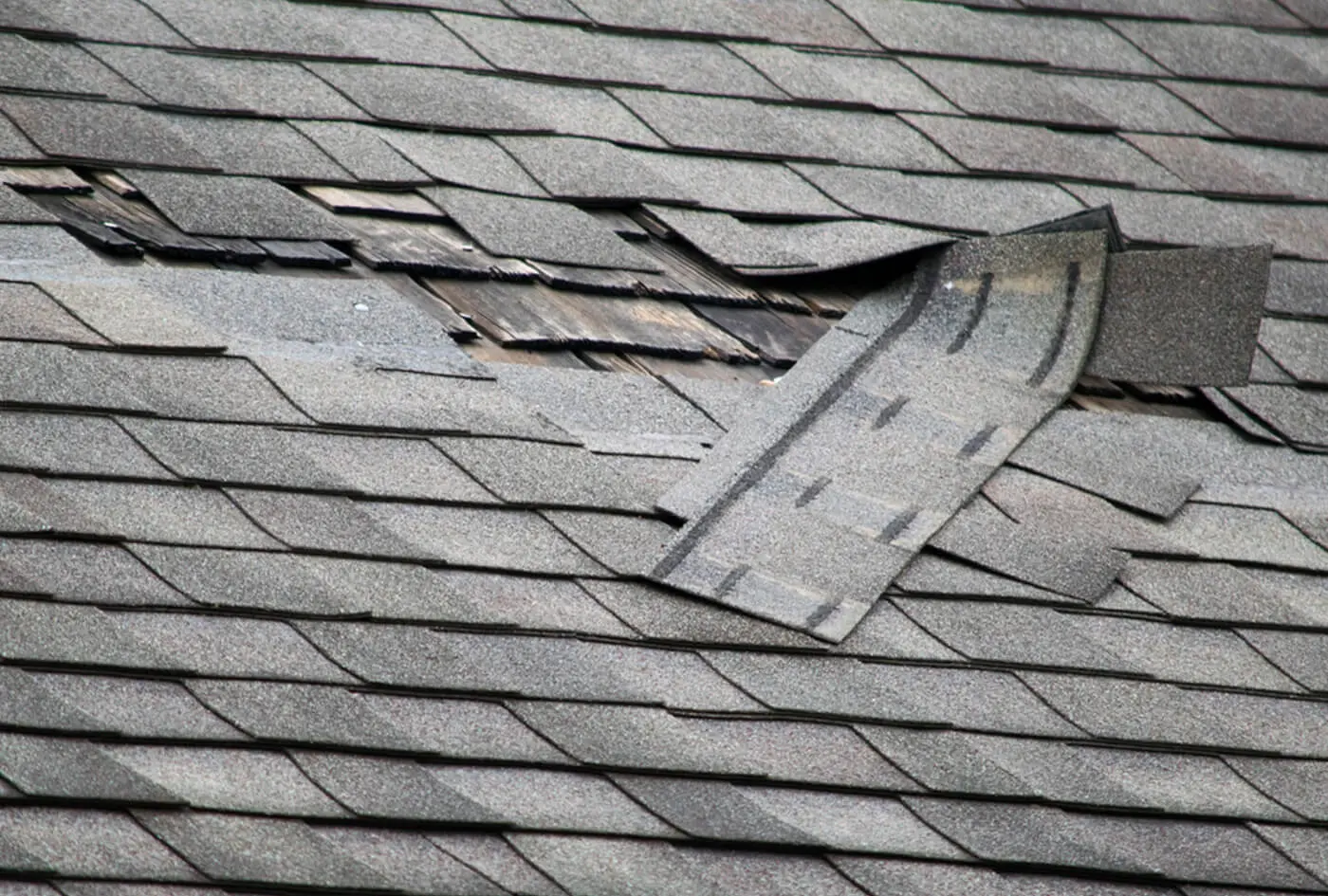
Picture yourself standing in your living room after last night's storm — water dripping from a ceiling stain and shingles scattered across your lawn. Understanding time limits for filing roof insurance claims in Pennsylvania could determine whether you receive financial protection or face out-of-pocket expenses from large weather events.
This state experiences billions of dollars in storm damage each year, with severe weather events striking communities across the state. These weather events, from hailstorms to high winds, create roof damage that triggers strict Pennsylvania insurance claim deadlines. Knowing how long you have to file roof claim requests matters when every day counts.
Grasping Pennsylvania storm damage claim filing requirements, navigating complex insurance policy language and recognizing when your roof insurance claim requires urgency from you, the policyholder, all determine your coverage outcome. Miss the window, and your coverage can vanish.
When storm damage strikes your roof, you're racing against your policy's terms and Pennsylvania roof damage claim rules established by state law.
Your Pennsylvania-specific insurance policy clauses set claim-filing periods for reporting damage and submitting documentation, while state regulations mandate minimum standards insurers must follow. Under these laws, insurers face strict obligations once you report an occurrence of damage.
The state's unfair claims settlement practices regulations are a legal requirement that asks companies to acknowledge claims within 10 working days, complete an investigation within 30 days and accept or deny claims within 15 days of receiving properly executed proof of loss.
Proof of loss consists of a formal sworn statement documenting your damages in detail. Many insurers require you to file this document within 60 days of the date of loss. It should contain a detailed inventory of damaged property, a description of what happened and an estimated value. Getting this right matters — incomplete submissions can cause claim delays.
Policies typically require immediate written notice, but the Pennsylvania statute of limitations on what constitutes a reasonable time depends on circumstances. The distinction between the date of loss and the discovery date becomes critical when damage isn't immediately visible. Report damage promptly to protect your policyholder's rights, even if your contract provides a more generous filing window within the Pennsylvania homeowners insurance claim period.
Claim time frames can vary based on policy language, damage type and whether hurricane or storm declarations that are considered catastrophic events have enacted special provisions. Coverage type, such as named peril versus all-risk, will also affect interpretation. Standard claim window clauses typically include:
Laws allow companies to shorten these periods from a two-year limit to one year from the date of the damage.
This distinction becomes critical when hidden damage complicates your situation. Date of loss marks when damage actually happened. The discovery date indicates when you first became aware of the issue, possibly weeks or months later.
Some policies start their claim period from the discovery of hidden damage rather than from when it occurred. Say a windstorm blows shingles off, or a hail storm damages your roof in March, creating microfractures that don't leak immediately. By June, water stains appear. Which date controls your time window — March or June?
The answer depends on your claim's validity, contract terms and how your insurance adjuster interprets your policy through the appraisal process. Review your policy carefully, or consult an insurance professional and a roofing expert to document any hidden damage before proceeding.
Emergency declarations can modify the standard time frame in extreme situations. When Tropical Storm Debby caused flooding across Pennsylvania in August 2024, the state issued disaster declarations for multiple counties. The Pennsylvania Department of Insurance urged companies to show flexibility in handling disaster claims for affected residents.
For homeowners, Pennsylvania-specific provisions for catastrophic events can mean extended deadlines, expedited processing and relaxed documentation requirements. You may qualify when your county receives an official emergency declaration or federal disaster relief. Even during high claim volume, regulations protecting coverage remain in effect — insurers can't ignore mandated response times.
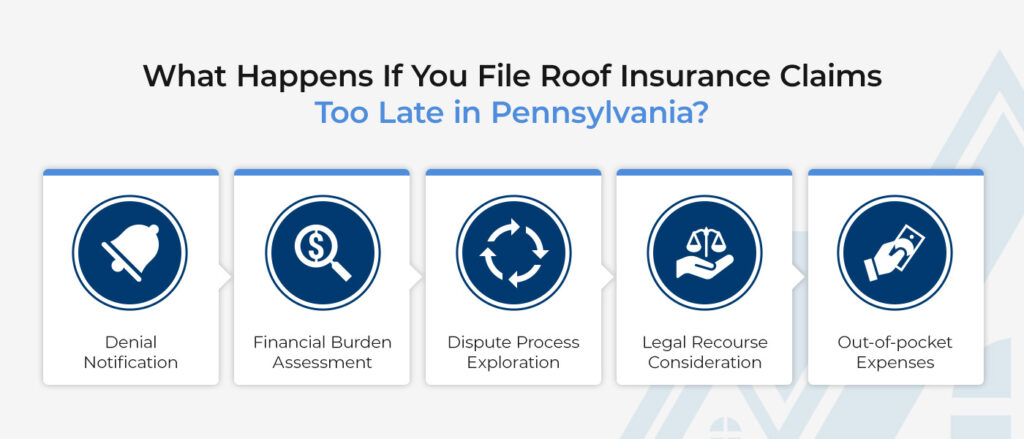
Filing after the deadlines have expired is a policy breach and can result in claim denial and coverage forfeiture, leaving you responsible for repairs or replacement. If you file late, these are the typical steps:
The financial burden extends beyond immediate repair costs. Denial can affect your home's value and your family's long-term financial security. Missing a cutoff under the statute transforms a covered insurance event into a personal financial crisis.
Weather considerations and swift action after discovering damage protect both your home and coverage. Follow these steps the moment you suspect trouble:
Taking these steps preserves evidence, prevents delays and positions your claim for the best outcome under roof damage claim rules.
Beyond understanding basic time frames, homeowners should know which state regulations work in their favor — and which provisions could complicate claims.
The Pennsylvania Department of Insurance provides official guidance on rights and claim procedures. Local laws in your favor require insurers to provide necessary claim forms promptly, respond to communications quickly and explain investigation delays in writing every 45 days.
However, companies can include contract language that shortens the statute of limitations to one year from the date of the damage. If you face denial, a quick legal consultation with a professional and further policy review becomes essential to preserve your protections.
For accurate information about time frames and Pennsylvania-specific rules, consult your insurance agent for advice. An insurance claim professional can help you navigate effectively and avoid delays during the appraisal process.
Part of a homeowner's responsibilities is dealing with a damaged roof. Lifetime Quality Roofing and Exterior Services stands beside you through every step of the process. Our expert team understands regulations and has strong policy knowledge, and we can help you file claims on time in Pennsylvania. From the moment we conduct your 100% free roof inspection, we provide comprehensive documentation that meets insurer requirements and identifies all damage, including hidden issues.
We work directly with your insurance company during appraisal, translating confusing jargon and protecting your insurance coverage. Schedule your free inspection today and gain peace of mind knowing you're prepared for Pennsylvania weather and protected against roof damage.