Roof Maintenance Checklist for Homes in Tampa, FL
Your roof is fundamental in protecting you from Tampa’s intense storms, hot summer days, and high humidity. Tampa’s changing weather …
February 6, 2026
7 MIN READ
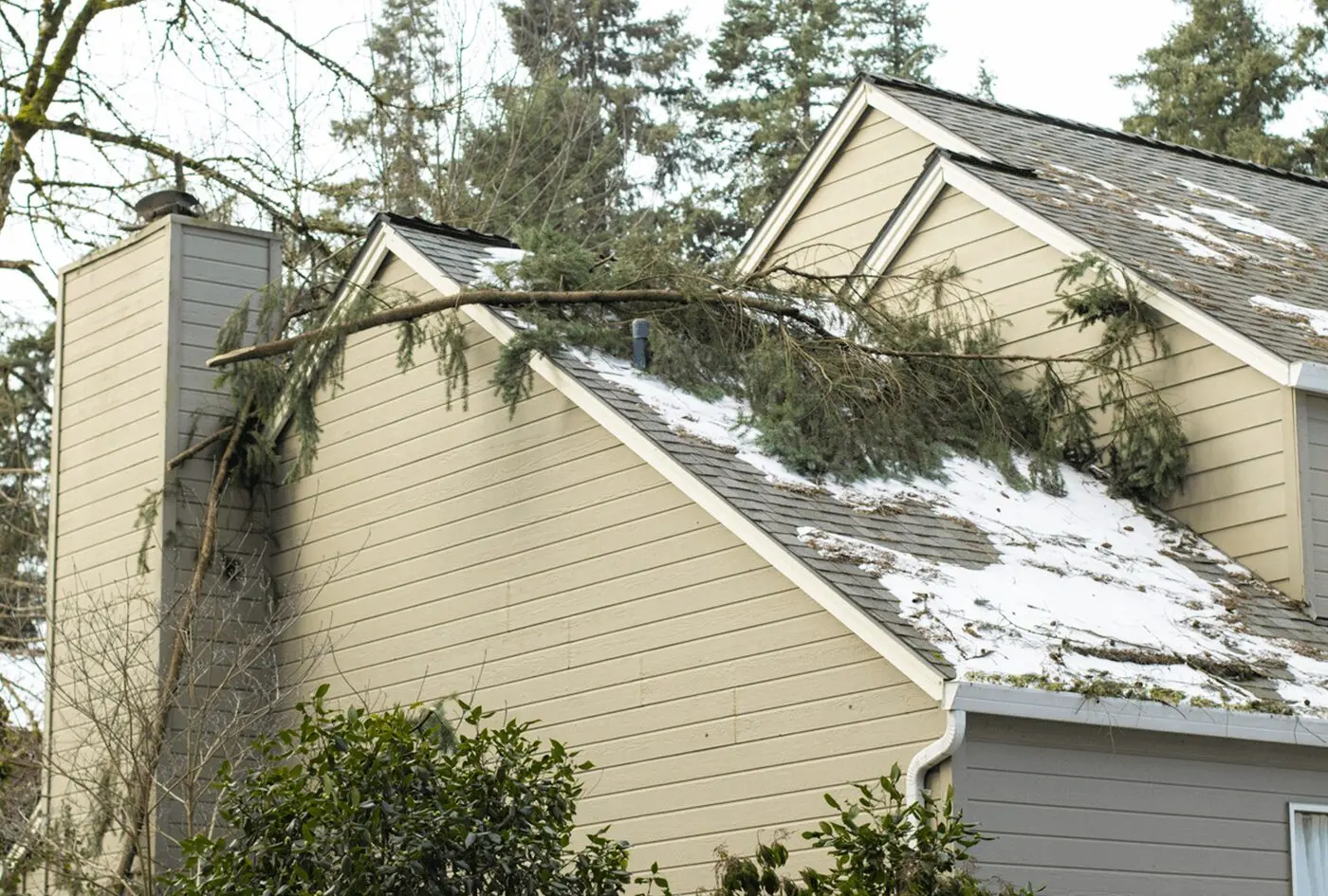
While winter weather brings cold temperatures and beautiful snow-covered landscapes, it also poses significant financial risks for homeowners. Yet many tend to assume standard homeowners insurance coverage protects them from all wind and ice damage, only to face claim denials when gradual damage or specific policy exclusions are cited during the claims process.
Understanding what qualifies as covered damage versus maintenance issues can mean the difference between successful winter storm insurance claims and thousands of dollars in out-of-pocket costs.
For homeowners insurance, wind damage typically includes sudden and accidental events that cause harm to your property's exterior. This definition serves as the foundation for determining whether your wind-related damage qualifies for coverage under your policy. Usually, any property damage caused by windstorms, hail or other severe wind-related weather events falls under this category.
Understanding which specific scenarios qualify as covered events helps you recognize legitimate damage when it occurs:
Your policy covers rain damage only when wind first creates the opening through which water enters. If rain seeps through deteriorating but intact shingles, insurance carriers classify this as an age-related maintenance issue rather than sudden storm damage.
As such, you may need a professional assessment to document whether damage resulted from a specific windstorm or progressive deterioration. Wind damage restoration experts use advanced technology to identify subtle indicators that distinguish sudden damage from wear and tear. Proving the cause was sudden is essential for ensuring proper wind coverage for roof damage.
Ice damage affects a staggering number of American homeowners. Around 31.4 million U.S. housing units are located in areas with significant ice-dam risk, making this a widespread concern across the country.
Ice dams form when heat from the attic melts snow on the roof, which refreezes at the cold eaves, creating a dam that forces water under roofing material. For this reason, insurance covers the resulting damage because it is considered a sudden, accidental and unexpected peril, similar to frozen pipes bursting, instead of a maintenance issue.
Insurance coverage for ice damage contains important nuances that can significantly impact your out-of-pocket costs. Most insurances cover the resulting water damage under dwelling coverage. This option usually includes repairs for damage to roofs, ceilings and drywall caused by ice dams. The insurance may also cover burst pipes if they're considered sudden perils and not the result of negligence.
The actual cost to remove the ice dam itself often falls outside standard coverage unless your policy includes a specific endorsement for this service. Regardless of your situation, professional ice damage roof repair services can assess whether your damage qualifies for coverage and document it correctly for your insurance adjuster.
Your homeowners insurance policy contains several coverage types that work together to protect you after a property-damaging weather event. Familiarizing yourself with these components helps you understand what protection you actually have when disaster strikes.
Most policies typically include these essential coverage types:
Home insurance for winter damage usually comes with a deductible and coverage limits. A deductible is the amount you have to pay before your insurance kicks in and covers the costs of your claim. Coverage limits have to do with the amount of coverage you put in place for your dwelling, personal property and ALE covers. The insurance will only pay up to that agreed amount.
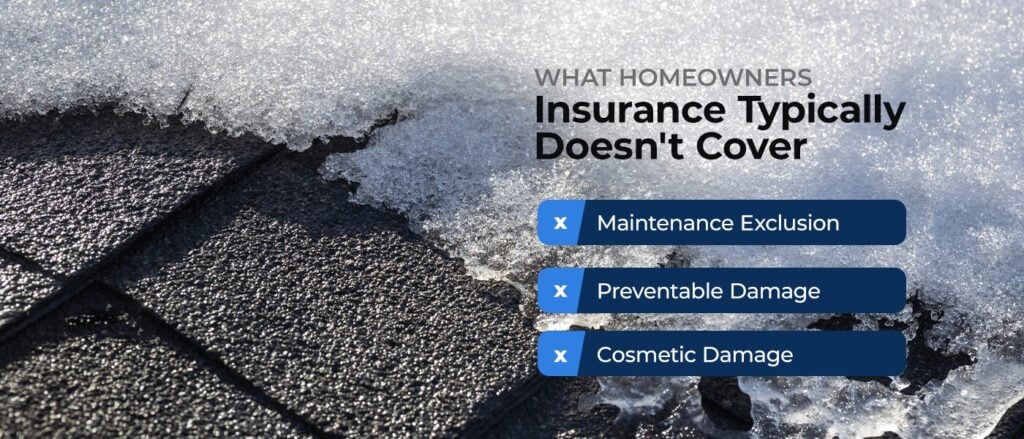
Understanding policy exclusions helps you avoid filing claims destined for denial and focus your documentation efforts on legitimately covered damage.
Maintenance exclusion is the leading reason for claim denial. Insurance carriers view damage to old or neglected roofs as gradual wear and tear rather than storm damage, regardless of when you first noticed the problem. If your roof showed signs of deterioration before the winter storm, your insurance adjuster may deny coverage by arguing the damage resulted from a lack of maintenance rather than the weather event.
Failure to mitigate further damage after an initial covered event may result in the denial of secondary damage claims. If wind creates a hole in your roof and you fail to tarp it promptly, subsequent water damage may not receive coverage. Insurance policies require policyholders to take preventive measures to avoid further harm after the initial damage occurs.
Some policies exclude wind and hail damage that doesn't compromise your roof's functional integrity. Dents in metal vents or cosmetic marks on shingles that don't affect weatherproofing may fall outside coverage, even when clearly caused by a covered storm event.
Securing insurance approval requires careful documentation and strategic timing. Getting the insurance claim process right from the start maximizes your settlement and minimizes delays.
Follow these essential steps to protect your interests:
Understanding your policy and recognizing what qualifies as covered damage empowers you to make informed decisions about home protection and storm preparedness. At Lifetime Quality Roofing and Exterior Services, we can be your trusted partner from beginning to end. Our experts can assess the impact of wind and ice on your property to provide a detailed understanding of the system's condition.
We also offer professional claims advice before filing with your insurance. Our team helps you navigate the claims process with confidence, document sudden and accidental damage properly and maximize your legitimate settlement. Contact us today for a free inspection to get you started on your claim.